

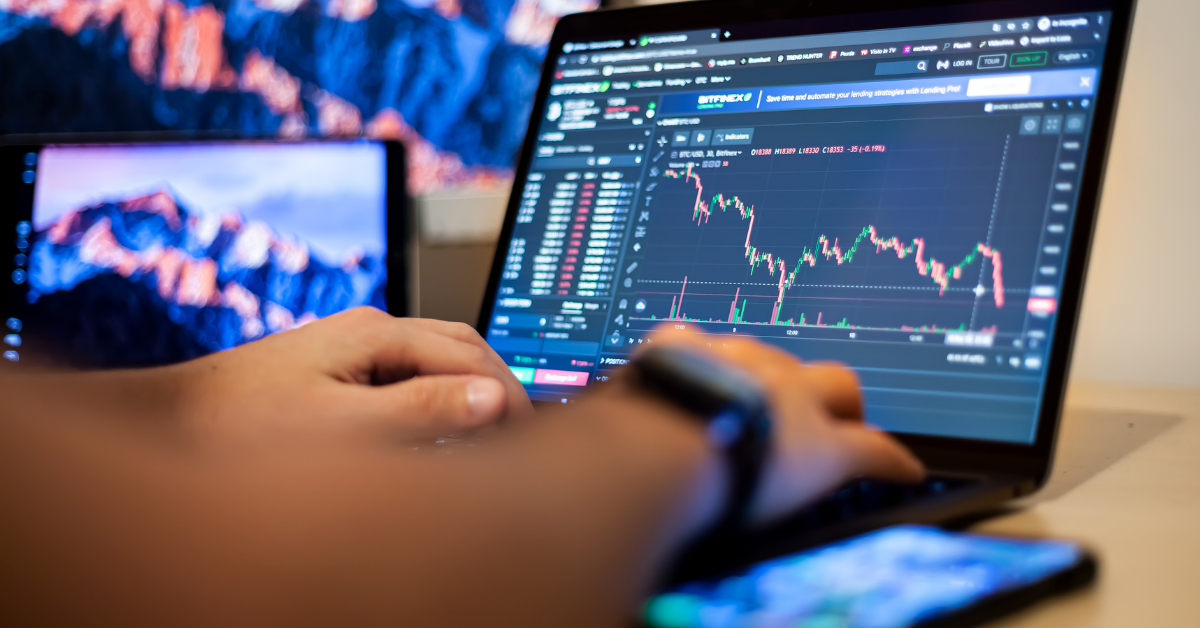
Paper Trading refers to trading futures without risking real capital. The trader buys and sells future contracts with fictional money but operates under real market conditions and information. The workout allows the trader to observe market action, order fulfillment, risk management, and strategy implementation just as in live trading—without risking or gaining capital. In the futures market, where leverage is enormous and prices may change in a flash with volatility, Paper Trading isn't practice—it's survival. It provides an investor with a risk-free setting to learn everything regarding the operation of futures contracts, i.e., contract expiration, tick size, margin requirement, and slippage. To those who want to qualify to be able to get funded accounts from prop firms, Paper Trading usually is the initial achievement. It assists to demonstrate that the trader can adhere to strict rules, control risk, and remain alive with a trading plan without even a penny of hard money ever being risked.
Why Prop Firms Like Paper Trading
Prop firms risk capital to trade futures but only if previously demonstrated skill and discipline have been exhibited by the traders. Prop firms want to know if, or not, traders can generate profits without exceeding drawdown levels and risk management. Paper Trading is how the majority of firms test if, or not, a trader is ready. Prop firms are especially blessed when performing Paper Trading as they can experiment with risk management techniques such as position size and stop loss without incurring capital loss. It also replicates strict limits such as daily loss limits and profit targets to which the traders are required to meet so they can trade under pressure. Paper Trading results are used by prop firms to evaluate a trader's market prediction, competence, and volatility management skills. Overall emotional stress cannot be replicated, but Paper Trading constructs psychological resilience to survive dumb mistakes and stick to a plan. It is highly appreciated by prop firms.
Paper Trading's Unique Role in Futures Markets
Futures are complex products with expiry dates and rollover features that set them apart from stocks or forex. Variable leverage and tick sizes by contract make them more complex to trade. Paper Trading allows them to practice mastering contract dynamics such as being able to master rollovers, margin calls, and expirations at no expense. It also teaches them to excel at coping with being able to handle high leverage and ride through volatility spikes during news announcement shocks or market surprises. Since futures trading needs quick decision-making and precision, Paper Trading habituates the confidence and muscle memory necessary to excel within such high-speed environments and is thus an irreplaceable testing ground for prospective traders.
Best Platform for Paper Trading
A proper platform for Paper Trading is required to practice realistically. Ideal Futures Trading Platform must provide live market feeds so that traders may make rational decisions based on live prices. It should be able to implement different orders—limit, stop, market, bracket, and conditional orders—to simulate live trading to the dot. Strong charting features and technical analysis indicators support trend analysis and trade plan development by the trader. It should also be able to track performance, maintain a trade journal, and export logs for review. Realistic touches such as partial fill simulation and slippage simulation add depth. Otherwise, access to a variety of futures contracts—indices, commodities, currencies—add strategy coordination and diversification. A well-designed platform allows one to switch instantly between Paper Trading and real trading with minimal jolts.
Mistakes in Paper Trading
Apart from its benefits, Paper Trading has faults that must be avoided by traders. It is traded too aggressively by too many in trade, risking too much, or don't use stop losses or test unrealistic trading systems since no money is being risked. All such evils never find their way into funded accounts. Too many traders are not psychologically cognizant of the distinction between live and paper trading and therefore overestimate themselves or do not take it seriously when Paper Trading but second guess and worry when money is on the line. Others are trapped in simulation for too long out of fear of losing money, which keeps progress behind. Others also overlook outside inputs like slippage and delayed orders, which will leave traders uncertain about how strategies will perform in actual market situations. Knowing such mistakes is a good thing in order to maximize Paper Trading.
Switching to Live Trading
Traders then have to switch to live futures trading after they possess a well-functioning trading system and balance in simulation. Begin with smaller size trades or micro contracts in an attempt to constrain exposure to risk while becoming accustomed to the emotional realism of trading actual money. Discipline is to be adhered to to the risk management principles and trading plan established during Paper Trading. Deliberate record of trades and emotional reaction facilitates self-awareness and ongoing improvement. The transition is essentially a form of Paper Trading, but with more emotional investment and involvement. The conservative approach allows traders to acclimatize to the psychological pressure of trading live without intimidation, to benefit most from long-term success and funded account access.
Conclusion
Paper Trading of futures is the stepping stone to becoming a successful trader, especially for prop firm traders. This is a risk-free offer to test the sophistication of futures contracts, set self-regulating trading protocols, and prove the ability to trade according to strict stipulations. Paper Trading results are of utmost significance to prop firms since these will ascertain a trader's readiness to deal with real capital in a responsible manner. Best Futures Trading Platform provides an easy solution with realistic, functional tools and market data. Though Paper Trading can never expect to fully replicate live trading emotional extremes, professionalism and prudence for what Prop firms demand can be learned. Harsh treatment of Paper Trading, avoidance of newb pitfalls, and approach into real trading on strict adherence to prudence charts a course for long-term success and sustained profitability in futures markets.
